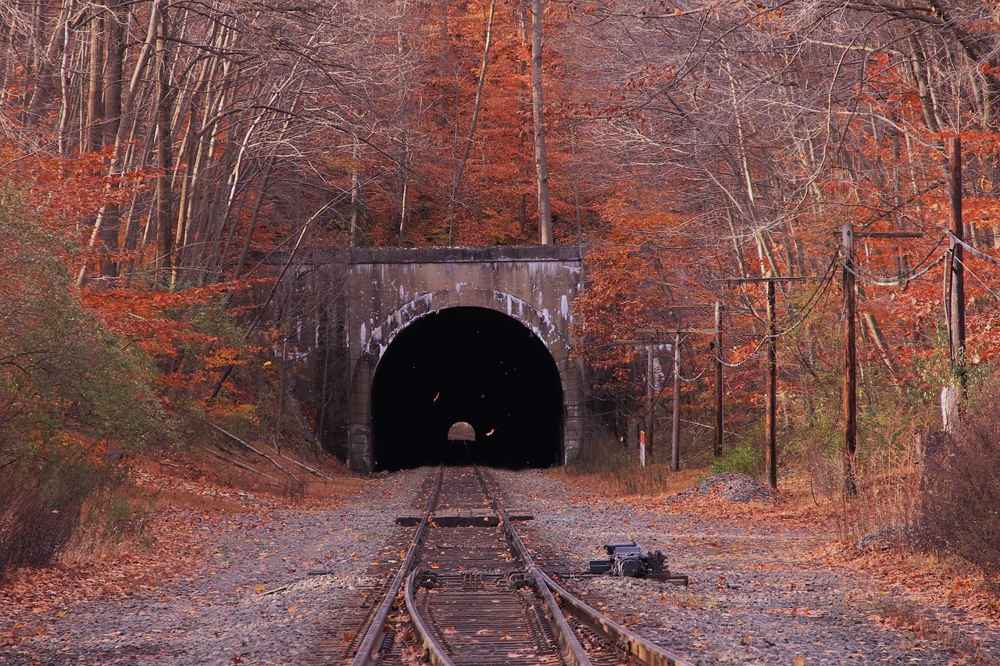
The short answer: for most passport holders, no. The eTA is a flying document, and the government’s rules say that if you come from an eTA-required country and arrive by train, you normally do not need one; you do need a valid passport. A visa-required passport needs a visitor visa on a train, even if it could get an eTA for a flight. If your trip also includes a flight into Canada, you can apply for a Canada eTA ahead of that flight; the service behind that link is private and paid, separate from the Government of Canada.
Going through canada.ca itself means paying the government fee and nothing more.
The three Amtrak routes that run into Canada end in Vancouver, Toronto and Montreal. This guide takes them in turn after sorting out the passport side, which a route page rarely does. If your plan mixes trains with a hire car or a flight, the leg-by-leg logic is also laid out in which legs of a fly-and-drive trip need an eTA, and the American-passport rules are in what US citizens need to enter Canada.
Does a train into Canada need an eTA?
No, in most cases. The government’s eligibility page splits travellers by how they arrive. For a flight, an eTA is required from citizens of eTA-required countries. For a car, bus, train or boat (a cruise ship counts as a boat), the same citizens do not need one, but they still need a valid passport.
One exception is named: sea travel from Saint-Pierre-et-Miquelon, excluding cruise ships, does require an eTA to board. It has nothing to do with a railway.
So the question to ask is not “which country am I going to?” but “how do I physically arrive?”. A train is on the same side of that line as a coach or a car.
What does your passport decide on a train?
The answer depends on the passport and not on the carrier. The table lists the cases canada.ca and Canada’s border agency (CBSA) describe.
| Your situation | On a train into Canada |
|---|---|
| Citizen of an eTA-required country (UK, most of Europe, Australia, Japan and others) | No eTA; carry a valid passport |
| US citizen | Exempt from the eTA; CBSA recommends a passport, and other documents showing name, date of birth and citizenship can also be presented |
| US permanent resident (green card holder) | Exempt; carry your passport and green card. CBSA says that when arriving by land or water directly from the US, the card alone is asked for |
| Citizen of a visa-required country who could get an eTA for a flight (the “select” list, such as Mexico or Brazil) | A visitor visa is needed, not an eTA |
| Citizen of any other visa-required country | A visitor visa |
| Canadian citizen | A Canadian passport; dual Canadian citizens must use it, except that Canadian-American dual citizens may travel on a Canadian or US passport |
| Canadian permanent resident | Permanent resident card or travel document |
The visa rows deserve care. Some visa-required nationalities can hold an eTA, provided they meet three conditions, but only for a trip that begins with a flight. A rail ticket does not qualify them. The short check of whether a passport needs a visa, an eTA or nothing walks through that split in plain terms.
Which Amtrak trains cross into Canada?
Three do, and all three start in the US.
| Train | Route | What the carrier says |
|---|---|---|
| Amtrak Cascades | Vancouver, BC to 18 stations in Washington and Oregon | Seattle to Vancouver takes about four hours, according to the Washington State Department of Transportation (WSDOT) |
| Maple Leaf | New York City, Albany, Niagara Falls NY, Toronto | Amtrak lists about 12 hours 30 minutes, with a daily departure; the train crosses the border at Niagara Falls |
| Adirondack | New York City to Montreal | Amtrak lists about 10 hours; it leaves New York in the morning and reaches Montreal in the evening |
Timetables and fares change, so confirm the current schedule with the operator before you book. The passport rules above do not change from one of these trains to another.
What about Seattle to Vancouver on Amtrak Cascades?
This is the route most searches mention. WSDOT, which sponsors the service with Oregon, announced in June 2026 that Pacific Central Station in Vancouver became North America’s first rail preclearance facility. From 8 June 2026, US customs checks for people travelling from Vancouver into the United States are done at the station, and the train no longer has to stop at Blaine, Washington.
That change is for the southbound direction, so it is not an answer to what Canada asks of you when you arrive from Seattle. For that, the same eligibility rule applies: if you hold an eTA-country passport, you need the passport and no eTA; if you are on the visa list, a visa.
Plan the return as carefully as the outward trip. A round trip means one Canadian entry and one US entry, and the American side has its own rules for your passport, which are separate from anything in this guide.
What about the Maple Leaf from New York to Toronto?
The Maple Leaf passes Albany and Niagara Falls on the American side and then enters Ontario at the Niagara crossing, with Niagara Falls, Ontario served as a station. For a stop at the falls, the Niagara Falls day-trip guide covers the visitor-visa question and the way back.
If you are staying longer and going on to Toronto, the document logic is the same as the table above: passport for eTA-country holders, a visa for visa-required passports.
What about the Adirondack to Montreal?
Amtrak describes the Adirondack as a daytime run from New York’s Moynihan Train Hall up the Hudson Valley and into Montreal. Nothing about the passport rules is specific to this train. An Australian, a Briton or a German does not need an eTA; a traveller whose passport sits on the visa-required list needs a visitor visa before boarding, because there is no eTA option for a train.
What happens at the border on a train?
An officer decides whether you may enter. The eligibility page puts it plainly: an eTA does not guarantee entry, and when you arrive, a border services officer asks to see your passport and other documents and you must show that you qualify to come in. Among the basic requirements the page lists are a valid travel document, good health, no criminal or immigration-related convictions, ties that will take you home, an intention to leave at the end of your visit and enough money for your stay.
Amtrak’s border crossing guidelines say that inspections on the Toronto route take place at Niagara Falls: passengers get off the train with their baggage, show the ID they selected when they booked, and reboard the same train. Amtrak adds that delays at the border are possible and outside its control. For trains leaving Canada, it asks passengers to arrive at least 60 minutes before departure in Vancouver and at least 30 minutes in Montreal or Toronto. Amtrak’s page does not say how long the Canadian check takes on the way in, so read its notice close to your travel date. What you can control is the paperwork.
Keep the passport where you can reach it without opening a suitcase, and have the answers to the usual questions ready: why you are visiting, where you are staying and when you are leaving.
When does a train trip still involve an eTA?
When there is also a flight. A few ordinary combinations:
- Fly to Toronto or Vancouver, then take a train out. The flight into Canada needs the eTA if you hold an eTA-country passport; the train after that does not.
- Fly into a US city, then train north. No eTA, with a passport from an eTA-eligible country; others need a visa.
- Connect through a Canadian airport on the way somewhere else. A transit counts as a flight; the layover guide on what an airport transit in Canada requires has the details.
One more case belongs to the visa-required group. canada.ca says that a traveller from one of the select visa-required countries who is already in Canada may make a direct trip to the US or Saint-Pierre-et-Miquelon and a direct return without a new visitor visa, provided the return falls inside the authorised stay. A detour changes it: re-entry by air then calls for an eTA, while re-entry by train or any other land or sea route calls for a visitor visa. For the full wording, see the government’s eTA eligibility page.
What should you carry on the train?
- The passport you will present to the officer, valid for the whole trip.
- A visitor visa, if your passport is on the visa-required list.
- A green card or permanent resident card, if that is your status. Carry your passport too; CBSA says that arriving by land or water directly from the US, the card alone is asked for.
- The same ID you selected when you booked: Amtrak says the document you carry should be the one you named in your reservation, and it must be the original.
- Your return or onward ticket and the address where you are staying.
- A way to confirm your eTA if you also have a flight: check your eTA status with the application number (or UCI) and the passport number together.
The short version
- The eTA is for flights; arriving by train, citizens of eTA-required countries normally need a valid passport and no eTA.
- Visa-required passports need a visitor visa on a train, even when an eTA would work for a flight.
- Americans carry a passport or other proof of identity and citizenship; green card holders carry the passport and the card.
- Cascades, Maple Leaf and Adirondack are the three Amtrak routes that cross into Canada, and the same rules apply to each.
- If a flight into Canada is part of the trip, that flight is where the eTA matters.
- No document guarantees entry; the final call belongs to the officer at the border.
FAQ
Do you need an eTA to take Amtrak to Canada? Usually not. If you are a citizen of an eTA-required country and you arrive by train, canada.ca says you normally do not need an eTA, but you do need a valid passport. Visa-required passports need a visitor visa instead.
Do US citizens need anything special for a train to Canada? They are exempt from the eTA. CBSA recommends a valid passport, and also accepts other documents that show name, date of birth and citizenship, such as a birth certificate or an enhanced driver’s licence, though a passport is the simplest.
Can you use an eTA instead of a visa on a train? No. For citizens of the select visa-required countries, an eTA works only for air travel. If you come by train, bus, car or boat, a visitor visa is needed.
Does the Seattle to Vancouver train need a different document from the Toronto one? No. The document depends on your passport and on how you arrive, not on which Amtrak route you take. The Cascades, Maple Leaf and Adirondack all follow the same eligibility rule.